Every spring, I make a visit to our Felda, FL research station to make line selections and evaluations of jalapeno peppers. This year our sowing and transplanting was a bit late, so I ended up going mid-June. Conditions were predictably quite humid and toasty, but overall weren't too bad for the early part of the week. All of my work is outside, but with proper hydration, eating, sleep, and acclimation, it's manageable. Makes you appreciate any less than 100-degree dry day in California by comparison!
Aside from work, I was able to see quite a few birds, especially at the research station! At this time of year, Florida reaches the end of its "dry" season and the beginning of the wet season. I speculate that with the coming rains, so does the beginning of new food sources, whether that's insects, nuts, etc., as well as living space for the aquatic dwellers. A lot of the overwintering birds leave by April, including the Warblers, Painted Buntings, etc., so most I see are the year-round residents. However, there are some birds that only visit Florida in the summer, including one of my favorites — the Swallow-tailed Kite, as well as the Gray Kingbird and Magnificent Frigatebird.
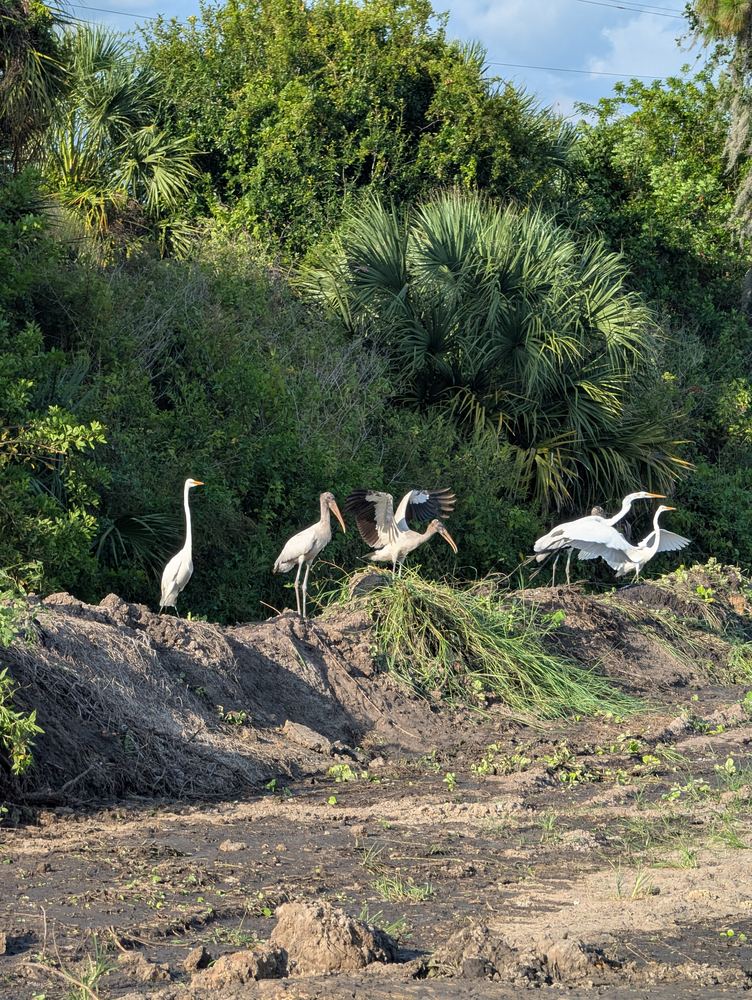
While I was making selections in the fields, research operations were doing a variety of management activities that would bring the birds around. Cattle Egrets would follow the mowers, Grackles would live in the cover crops, and the vultures (Black and Turkey), Crested Caracaras, and Sandhill Cranes would still be picking at leftover fruits from the melon and squash breeding trials. Operations were also doing dredging of the drainage ditches around the station, which brought a large crowd of Wood Storks, White Ibises, Great Egrets, Snowy Egrets, Green Herons, and Little Blue Egrets to feast on the bugs and larvae that would get dug up. Other regular visitors at the station are the flyovers of Swallow-tailed Kites, Common Nighthawks, Glossy Ibises, and woodpeckers. Around the station, you can always hear or see Mourning Doves, White-winged Doves, Eurasian Collared-Doves, Loggerhead Shrikes, Blue Jays, Mockingbirds, Brown Thrashers, Wild Turkeys, and the meandering Sandhill Cranes.
On my Saturday off, I started my day by taking a trip to the Babcock Ranch Preserve. There's an eco-tour area, but I was more interested in seeing birds, so I stopped by the Footprints Trail. I was hoping to maybe find a Red-cockaded Woodpecker, but no luck. The trail was a really nice gradient between the different types of vegetation that exist in this region of Florida. A drop of a few feet in elevation brings you from a mixed pine forest to a swampy cypress grove.
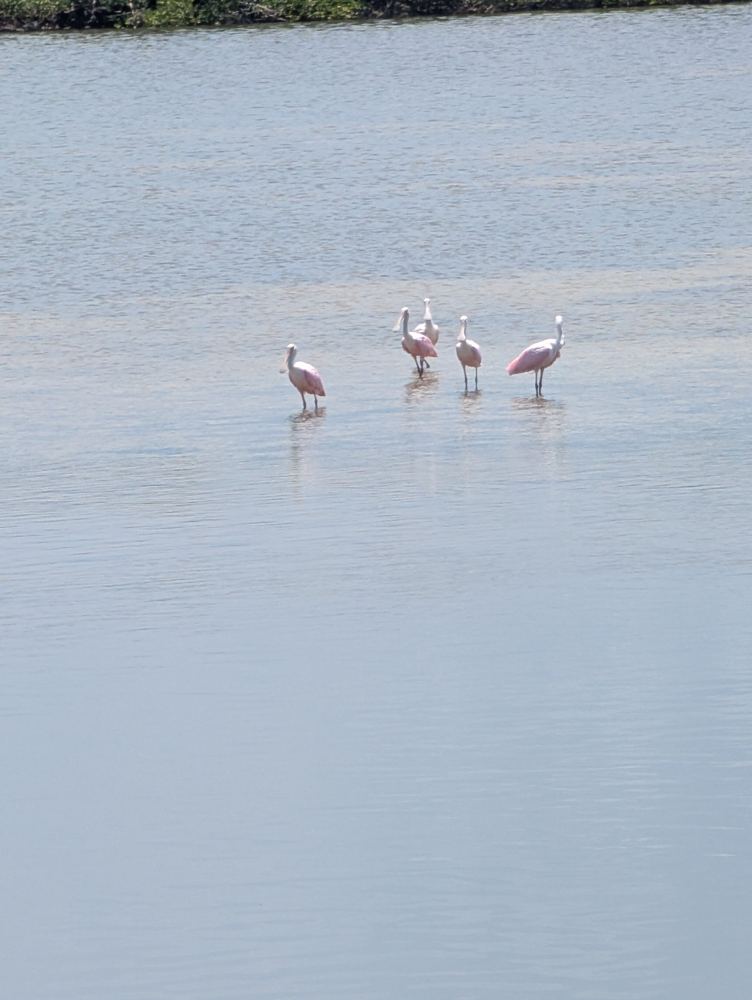
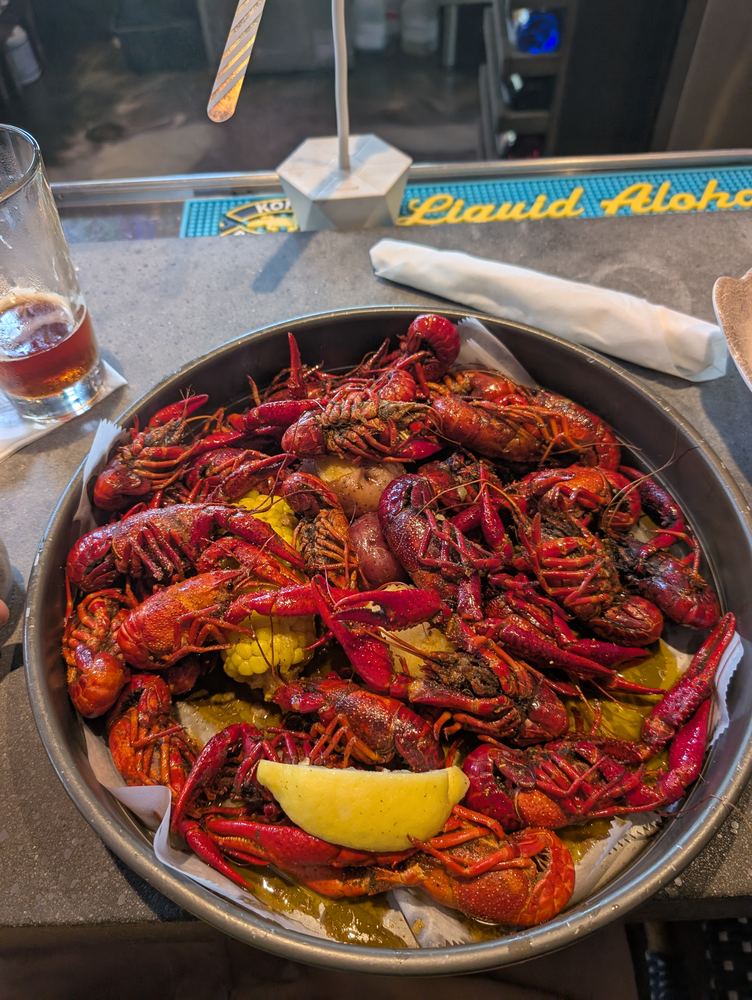
Afterwards, I decided to make a trip to Sanibel Island. I last visited this place with my family on vacation in March 2023. We all enjoyed our time there — the wildlife, the beaches, and, since it was March, the nice weather. In 2022, Hurricane Ian brought significant storm surge and damage to the island. A lot of buildings have since recovered, and the mangroves are coming back, but there are still a lot of dead areas around. I went to the Ding Darling National Wildlife Refuge, hoping to see some birds. This day was definitely one of the more brutally humid experiences I've had. Felt like walking out of the shower! Given the temperature and humidity, I was keeping my bird trips outside the drive-through area to a minimum. Significant birds I saw were Roseate Spoonbills, Willets, Osprey, Great Blue Heron, White Ibis, Snowy Egret, Prairie Warbler, and Magnificent Frigatebirds flying high overhead. After my visit to Ding Darling, I had a crawfish boil for lunch at MudBugs Kitchen. Overall, a great day!
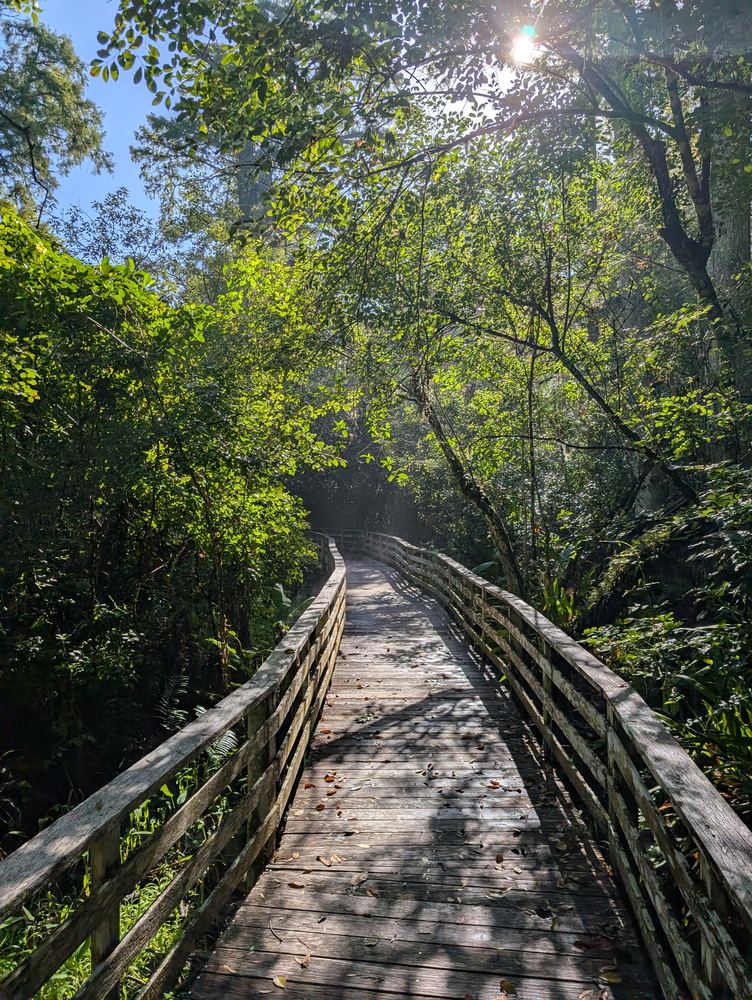
The following Tuesday, I took a morning visit to the Audubon Corkscrew Swamp Sanctuary. Always a favorite, they have a really nice boardwalk, taking you through the largest remaining old-growth cypress forests in Florida! Some of the birds I saw or heard included a Yellow-billed Cuckoo, Pileated Woodpeckers, Chimney Swifts, White-eyed Vireos, Black-bellied Whistling-Ducks (perching in the treetops!), Red-shouldered Hawks (extimus), Carolina Wrens, and Northern Parulas. Feel free to check out my iNaturalist sightings from here.
Southwest Florida is one of my favorite places to visit in the United States! It's the most tropical area in the continental United States, providing a unique climate for biodiversity, as well as an important location for crops and agriculture. Unfortunately, many of the birds, plants, and animals in southwest Florida are under threat from the rapid housing development expansion! Perhaps the cost of insurance in a flood-prone area and lessening housing demand will curb this development somewhat, but more action will be needed to prevent the reckless expansion into habitats of species under threat.
Comments